Jan. 2022 – Feb. 2022
Creating an MVP of hospitality platform with Design Sprint
About the product
Athletes Hospitality is a sports travel management company that simplifies travel logistics for teams attending amateur sporting events. There was no digital product yet.
Team
- Product Owner
- Solution Architect
- Product Manager
- Product designer (My Role)
- Senior Software engineer
Main Project Goal
Creating a digital product that will enable hotel sourcing, streamlined booking, and dedicated support to event organizers, venue operators, and clubs or colleges, aiming to enhance the overall travel experience.
Discovery
Background
Our clients approached us with an idea: to build a digital platform for managing sports team logistics. Their vision was to simplify the complex and often chaotic process of organizing team travel, accommodations, and scheduling.
Building a product that didn’t yet exist was both exciting and challenging — we needed to define the product itself while ensuring it met real user needs.
Initial Steps
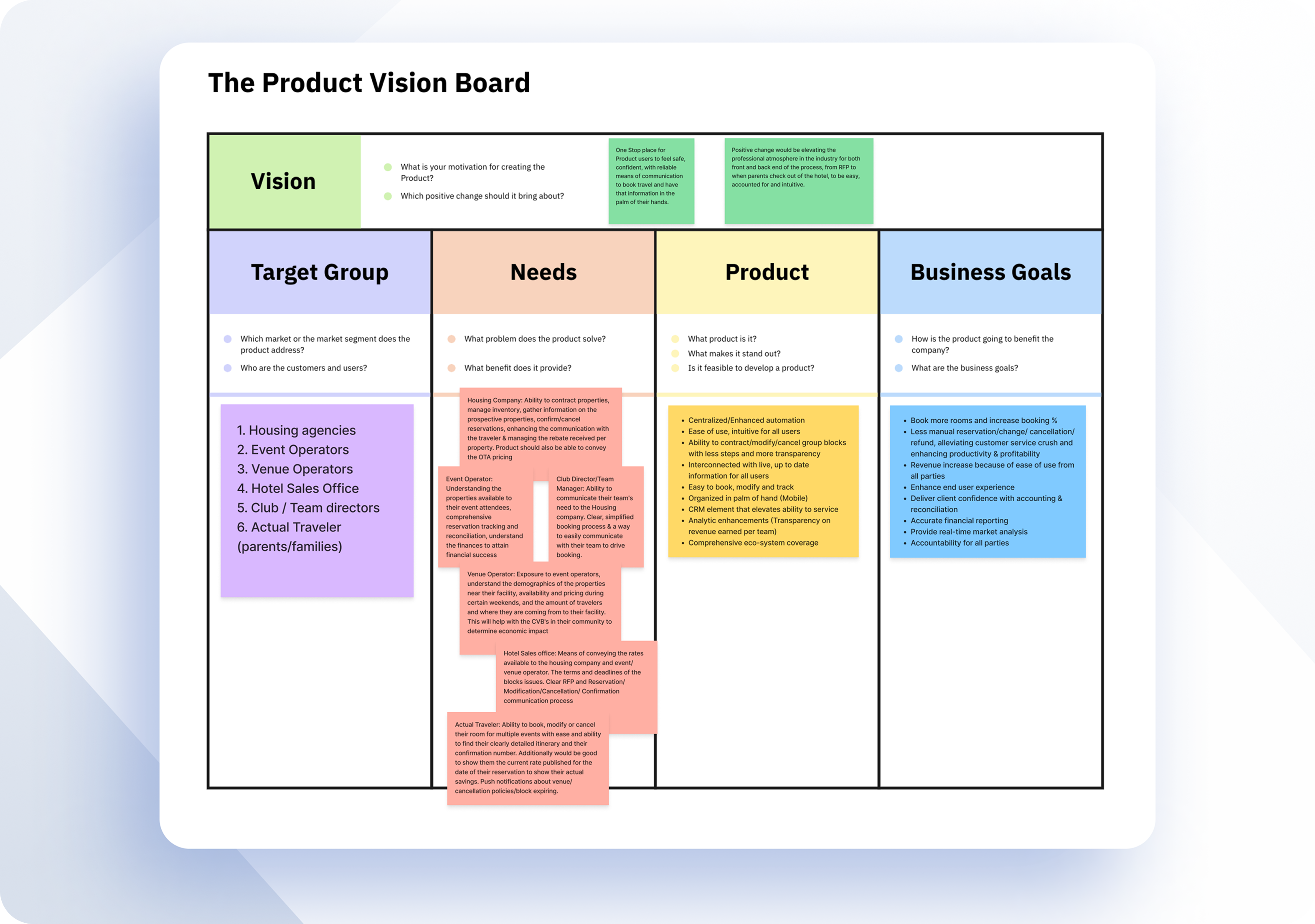
To achieve this, we started with Product Vision and Strategy workshops. These sessions helped our clients shape their abstract ideas into something more concrete.
However, a major challenge emerged: everything seemed equally important. Another issue was the lack of real user data — while our clients had industry experience, they had never formally gathered insights from other potential users.
Problem Definition
Challenge
Sports teams frequently travel across the U.S. for tournaments, often relying on coaches, managers, or parents to coordinate logistics.
This includes:
- Booking stadiums and training facilities
- Arranging transportation
- Securing hotels and accommodations
- Managing team schedules and coordination
The current process is highly fragmented and inefficient:
- Lack of centralization: Travel logistics are handled through emails, phone calls, and paperwork, leading to excessive back-and-forth communication.
- Coordination challenges: Responsibilities are split among different people, resulting in miscommunication and frustration.
- Unpredictability: Last-minute changes to schedules, locations, or bookings cause confusion and disrupt planning.
Our clients saw an opportunity: a digital product that could unify and streamline these processes. But before investing in development, we needed to validate whether such a solution would truly solve user problems.
Problem definition
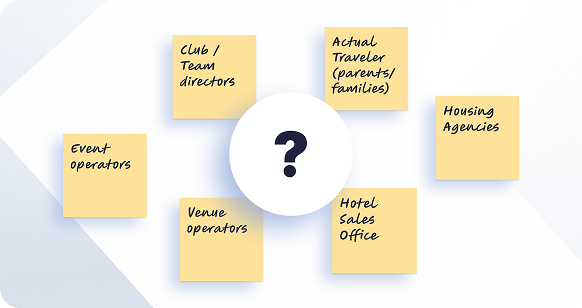
During our workshops, our clients identified seven potential user groups for their product. Choosing a starting point proved to be difficult — each group had unique needs, and it was unclear which segment to prioritize.
Additionally, without direct user feedback, we couldn’t be certain that our assumptions aligned with real-world challenges.
Goals and Objectives
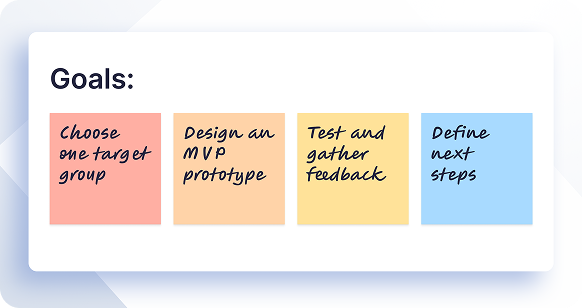
To break through this uncertainty, we proposed a Design Sprint. This approach offered clear advantages:
- Prioritize and select a single focus group for initial testing
- Build a high-fidelity prototype of an MVP
- Gather immediate user feedback without significant time and money investment
- Use insights to shape the product strategy moving forward
Our clients agreed, and we began preparing for the sprint.
Preparing for the Design Sprint
To set ourselves up for success, we:
- Scheduled interviews with a focus group of 7–10 potential users
- Developed and refined interview questions as a team
- Explained the Design Sprint process to our clients and planned all necessary meetings
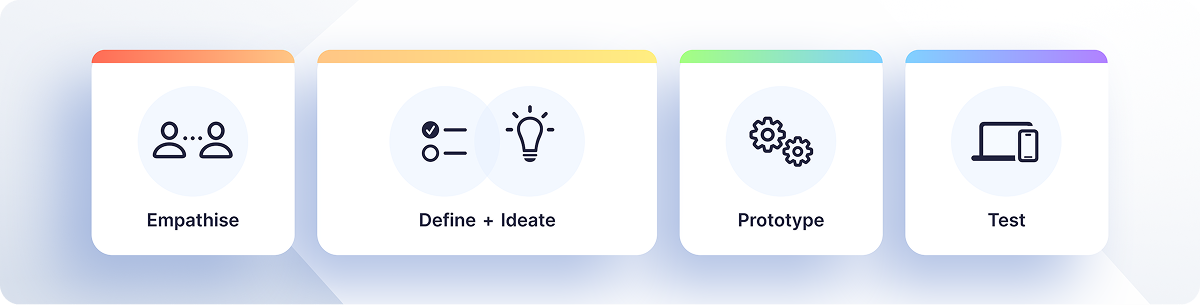
- Adjusted the sprint timeline to fit four days instead of five by combining Define and Ideate phases
With the groundwork in place, we were ready to dive into the sprint.
Solution Design
Design Sprint
Day 1: User Interviews & Insights
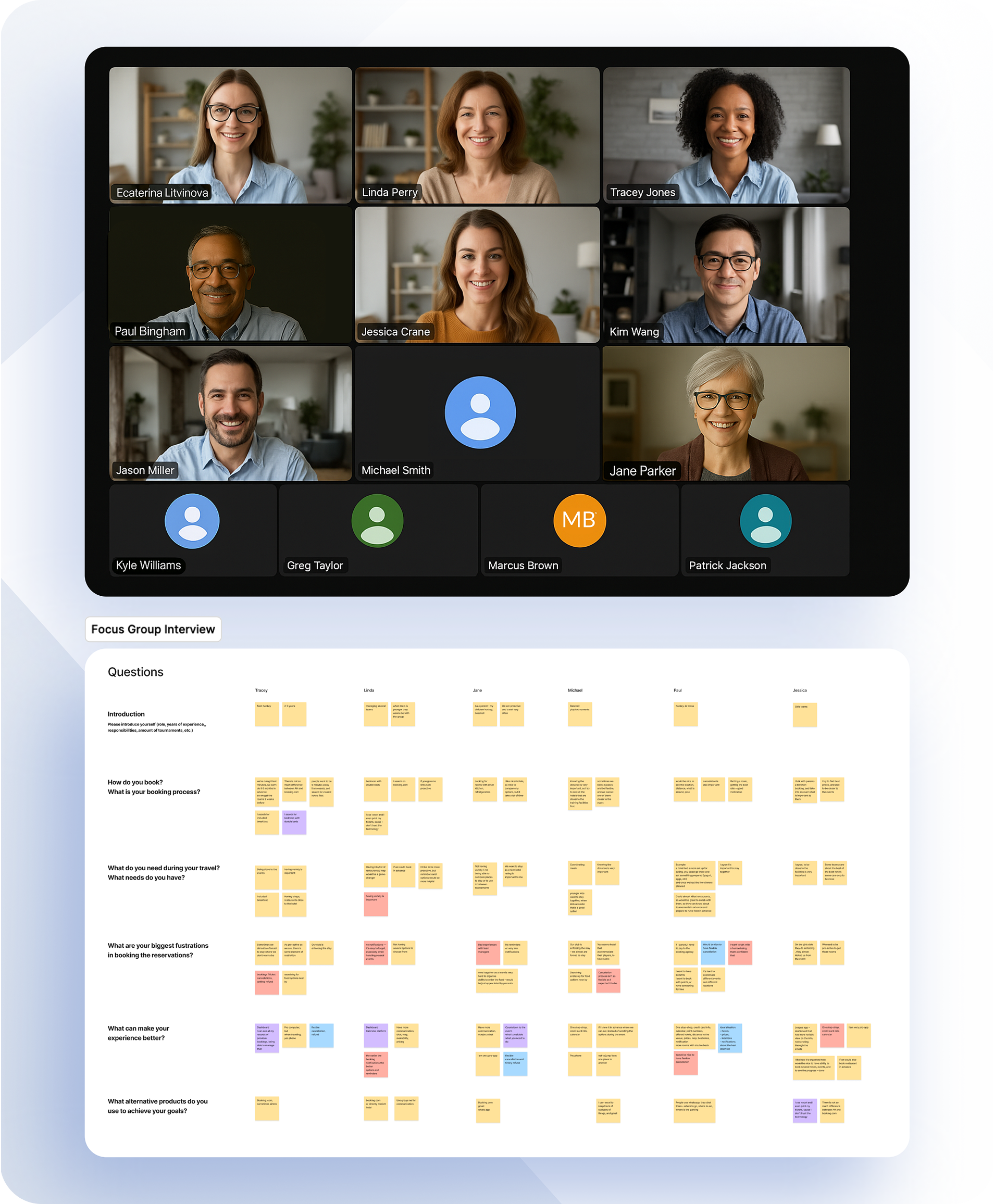
Our Design Sprint started with a focus group interview. This remote session lasted about 1.5 hours and included seven participants—mostly parents and two team/club managers. We asked open-ended questions about their experiences, frustrations, and workflows, allowing for detailed responses and follow-ups.
We documented everything, and the key takeaways were:
- Coordinating team events, managing schedules, and handling last-minute changes is chaotic and lacks centralization. Users need a calendar, a dashboard, and a history of events with the ability to update schedules in real time.
- Timely feedback is essential. Users want notifications, confirmations, cancellations, and reminders for check-ins and check-outs.
- The booking process is frustrating. Users require more filters (e.g., single beds, fridge/kitchen availability) and an option to compare accommodations.
Day 2: Defining
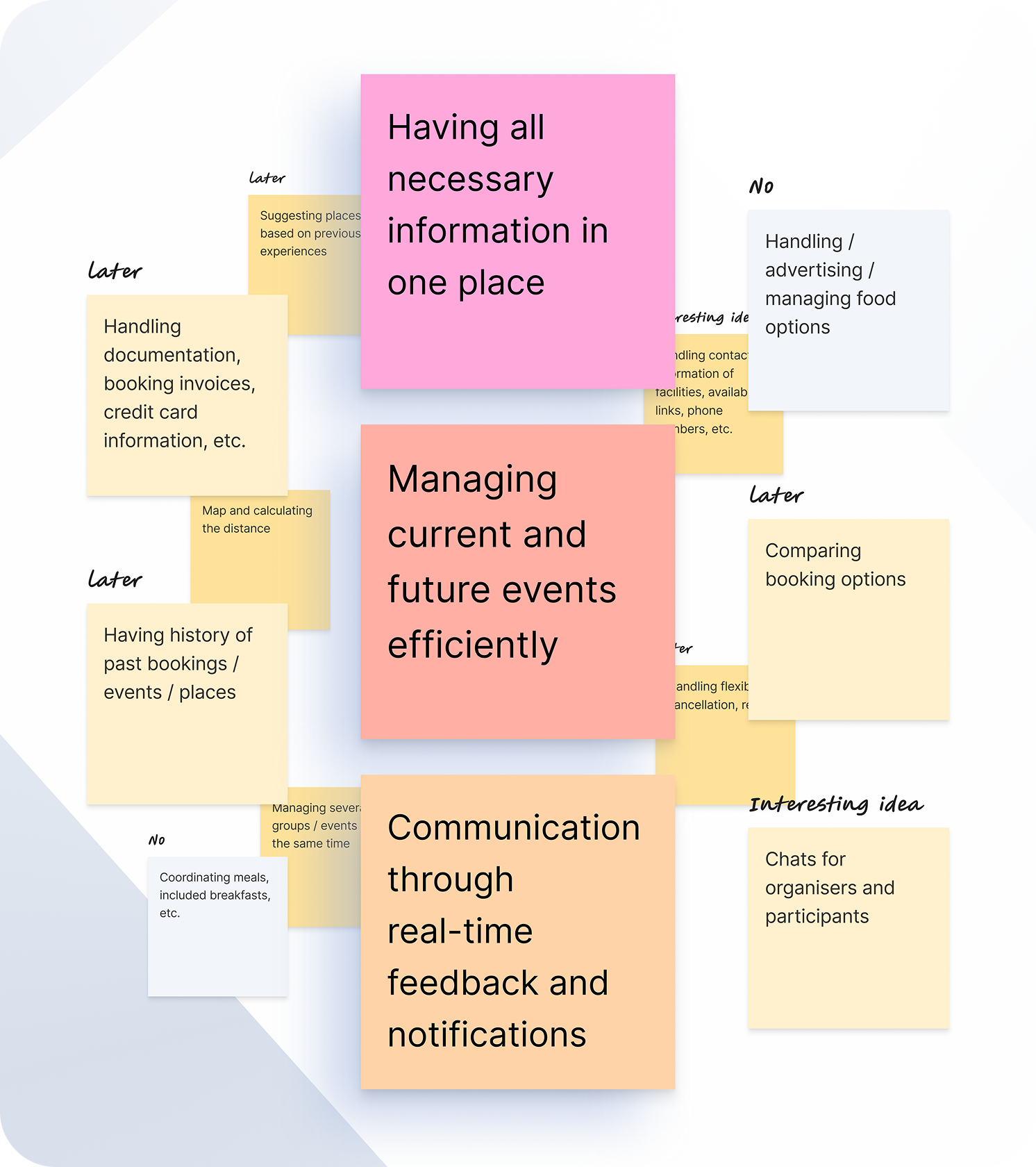
With this feedback, we moved into defining the core problems and prioritizing features. The discussion was intense—our clients were surprised to learn that food logistics were a major concern for parents. However, they chose not to explore this direction, which is a common scenario in Design Sprints.
Since we couldn’t solve everything at once, we focused on three core features for the MVP:
- Centralizing information for better event management
- Managing current and future events efficiently
- Enhancing communication through real-time feedback and notifications
Another crucial decision was made: the MVP would be a mobile app due to the need for on-the-go access to information. A web version could be considered in the future for more complex tasks like bulk scheduling.
Ideating
With clear priorities in place, we moved into the ideation phase. To foster creativity, we used the “Together Alone” method, allowing everyone to generate ideas individually before sharing and voting. The result was a variety of sketches representing potential solutions. As the designer, I saw opportunities to incorporate additional improvements but decided to park them for a later iteration. If time allowed, I would subtly integrate them into the prototype as a “pleasant surprise.”
Day 3: Prototyping
Once the best ideas were selected, I transitioned into high-fidelity design and prototyping. This was one of the most intense design experiences of my career—not only was I the sole designer, but I was also receiving hourly feedback from stakeholders. The rapid iteration cycle was demanding but ultimately rewarding.
For the prototype, I:
- Designed a mobile app using iPhone 12 as the base device
- Applied Human Interface Design (Apple) components for consistency
- Incorporated the brand colors and fonts of Athletes Hospitality
- Built interactions and crafted a scenario for usability testing
By the end of the day, the prototype was ready for presentation, complete with interactive flows.
Day 4: Usability Testing
The final day of our sprint was emotionally charged. This was the moment of truth—would our MVP resonate with users? We conducted remote moderated testing with our original focus group of 7–10 participants. Each session provided valuable insights, and we collected both qualitative feedback and a numerical rating for the MVP. The results were a success: Our MVP scored 8.5/10—a crucial indicator, as anything below 8 typically suggests a need for major revisions.
Outcomes
Day 1: User Interviews & Insights
The MVP successfully addressed:
- The main pain points of our focus group
- Helped our clients prioritize features and identify future opportunities
- Assisted with strategic planning and backlog creation for further development
- Reinforced the understanding that great products are built through strong user connections
My Learnings
- Design Sprints are highly effective but also incredibly stressful, especially when working as the sole designer.
- Saying “No” and prioritizing is a necessary challenge—it enables focus, experimentation, and measurable results.
Final Impact
- Our clients were highly satisfied. Although they initially had different expectations, they left with a validated MVP and a clear path forward.
- Our agency secured a long-term partnership, continuing to work with the client for the next three years.